
Chuan Park
10 units available
$2,555–$2,617 psf
99% sold
One Chuan Grove is an upcoming launch in D19 (OCR, North-East region) — GLS site: Chuan Grove GLS. Everything below is compiled from matched transactions, URA tender data and public sources.
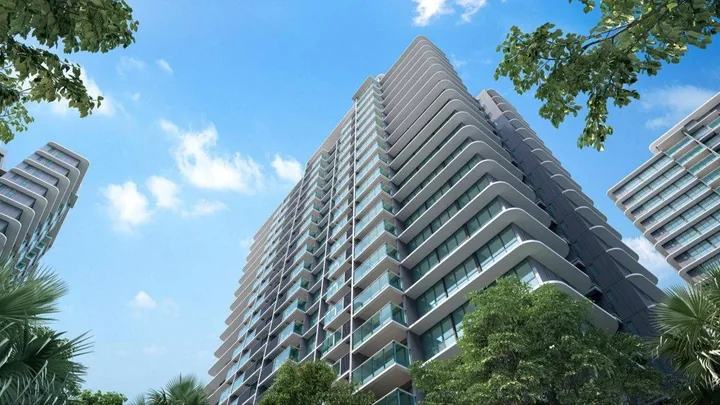
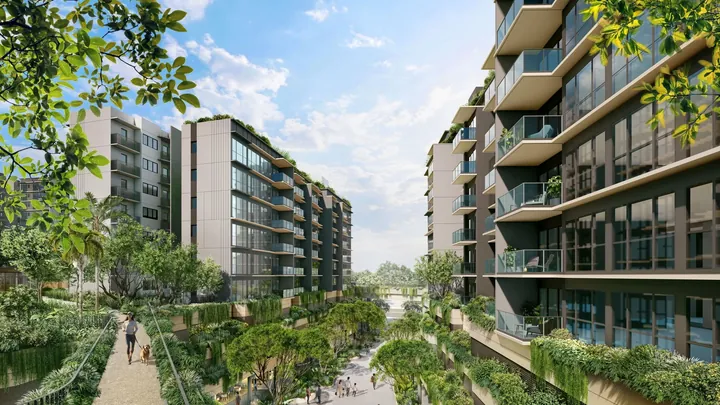
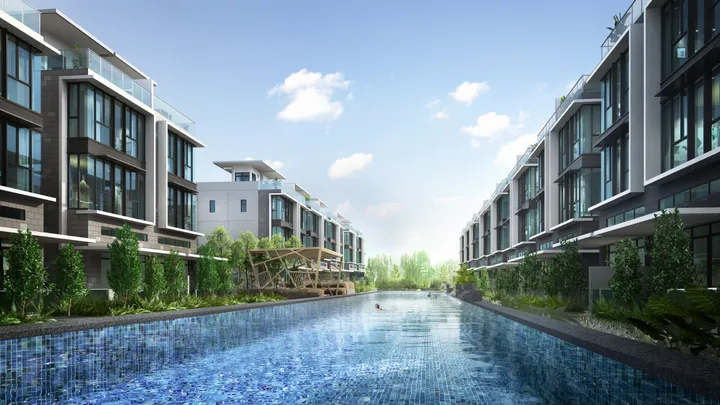
One Chuan Grove in D19 — 4 developer images. Select any image to view it full size.
Artist impressions and marketing images are supplied by the developer and compiled by PropertyInsider.sg. They are indicative only, may show upgraded finishes or landscaping that is not part of the standard specification, and are not a representation of the completed development. Verify the specification against the developer’s sales documents.
One Chuan Grove is an upcoming 1,056-unit 99-year leasehold condominium in D19 (OCR, North-East region), developed by Sing Holdings / Sunway Developments, with completion expected in 2031. The land was secured through a URA Government Land Sales tender in September 2025 at $1,355 psf ppr.
The site sits about 0.44 km in a straight line from Lorong Chuan (CC14), roughly 7 minutes on foot. It has not launched. Our estimated launch range is $2,820–$3,190 psf (est.), anchored on an estimated breakeven of $2,456 psf ppr — see the estimate and its cost stack below.
This overview is generated from PropertyInsider.sg’s tracked record for this project — URA tender data, matched caveat transactions and public filings — not from developer marketing material. Figures as at 20 Oct 2026. Anything marked (est.) is our estimate and is explained where it appears.
The full tracked record for One Chuan Grove, grouped by what it tells you. Every figure here is repeated in context further down the page, with its source and its caveats.
Compiled by PropertyInsider.sg from URA tender records, matched caveat transactions and public filings; last refreshed 20 Oct 2026. Values marked (est.) are our estimates — the launch-price method is set out in our pricing methodology.
PropertyInsider’s estimated launch price for this site, and the indicative quantum that range implies at typical unit sizes.
Breakeven is the estimated total development cost divided by gross floor area, in dollars per square foot per plot ratio — the same basis as the land rate. Cost stack: PropertyInsider.sg cost model, land awarded 10 Sept 2025. Figures are estimates (est.), not the developer’s accounts.
Estimates are anchored on the site's estimated breakeven rate and a measured developer margin band; developers make final pricing decisions. Indicative quantums apply the estimated psf range to typical unit sizes — not a price list.
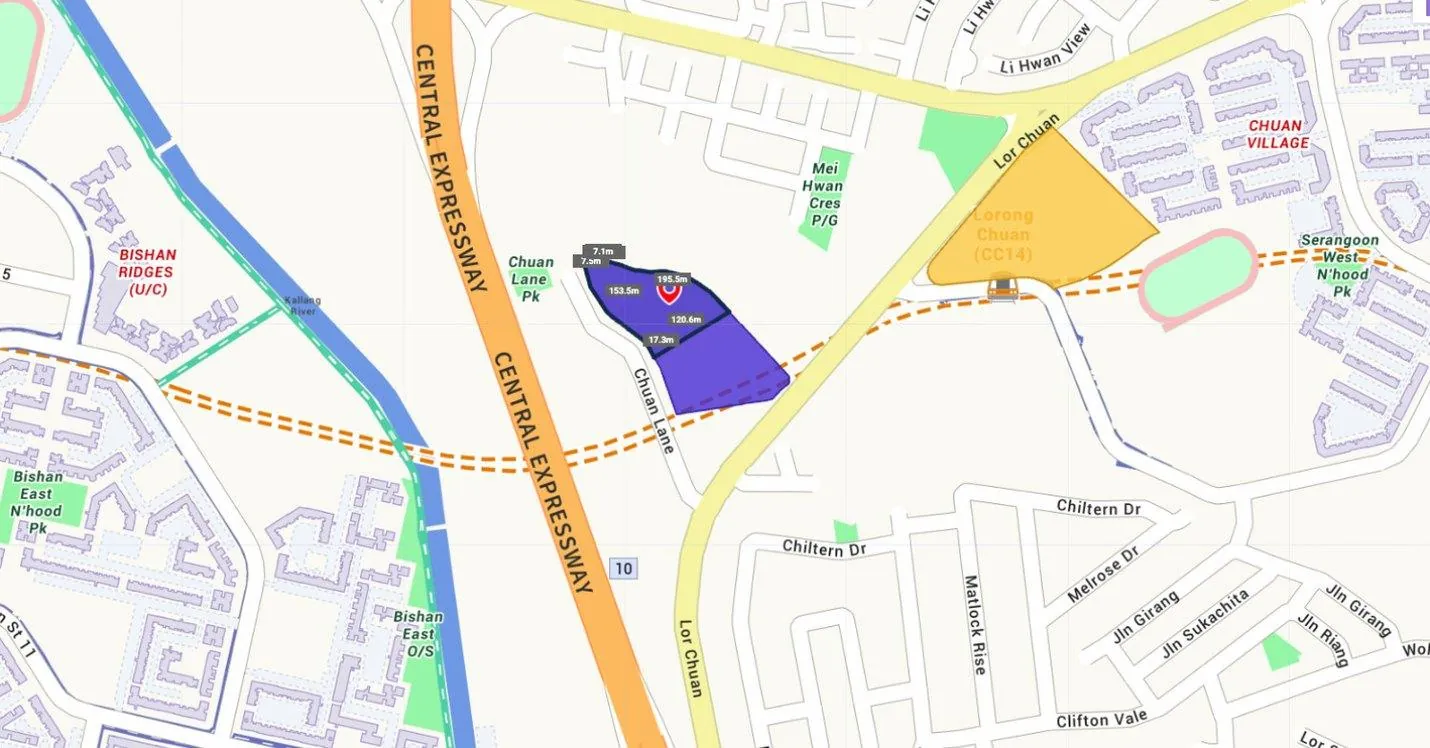
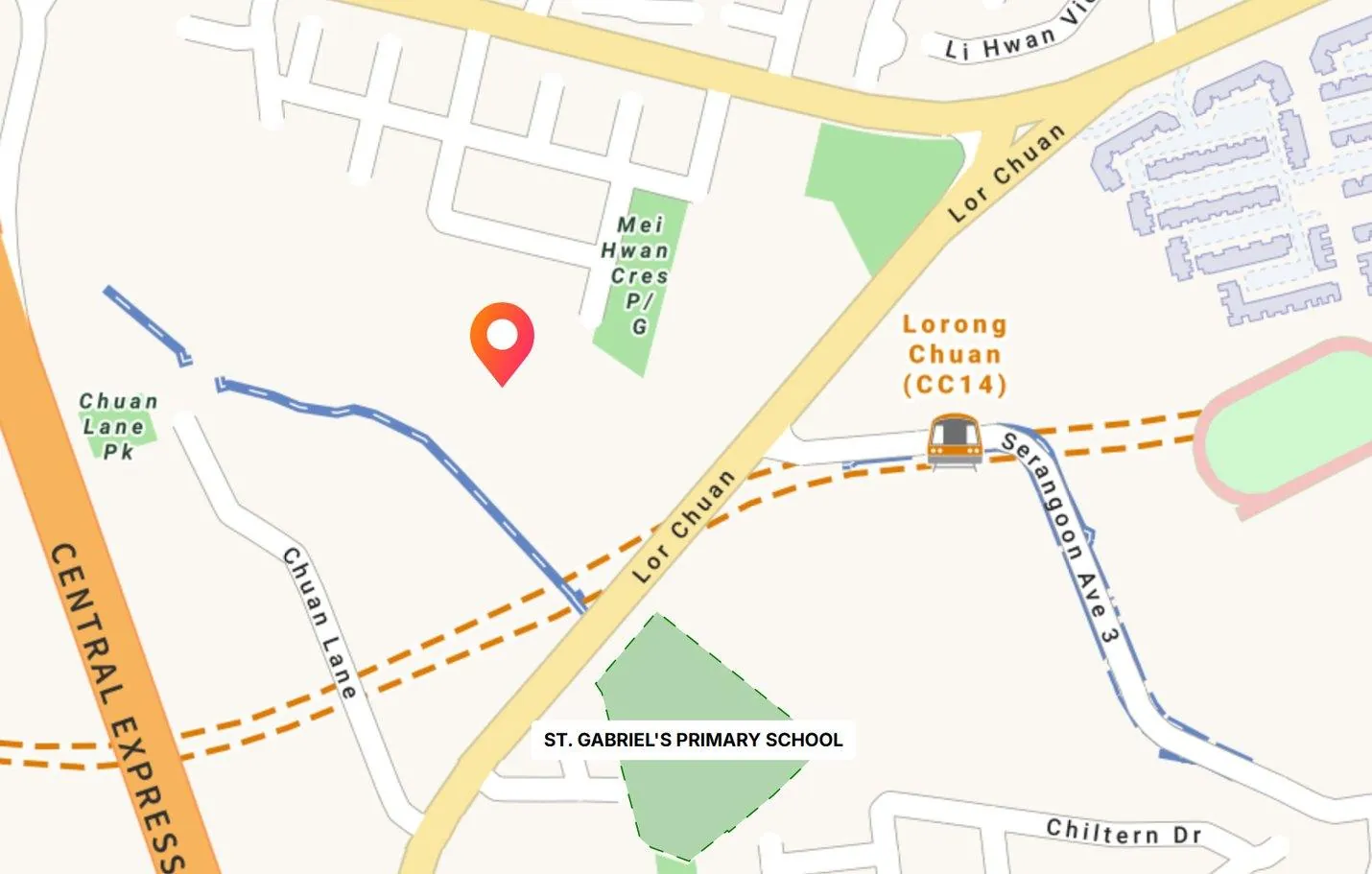
Where One Chuan Grove sits on the map, with its district, market segment and nearest station on the rail network. The nearest MRT station is Lorong Chuan (CC14), about 0.44 km away in a straight line, roughly 7 minutes on foot. The dashed rings on the map mark straight-line 1 km and 2 km radii from the site.
One Chuan Grove is located at 1.35082, 103.86008 in D19, Singapore. The interactive map loads when this section comes into view.
Open this location in Google Maps·Every tracked launch on one map·Primary schools map
The marker is an approximate site centroid compiled by PropertyInsider.sg, not a surveyed boundary. Station distances are straight-line, measured from the site centroid to the midpoint of a station’s published exits (LTA MRT/LRT exits dataset) — not the distance to the nearest exit, and not a walking route. Walking times are an estimate only and are omitted beyond 2 km. Base map tiles are © OneMap / Singapore Land Authority. Verify exact addresses, boundaries and journey times with the developer or on OneMap.
The places that actually shape how this address lives day to day — stations, schools, food, shops, green space, healthcare and the nearest employment nodes — with a straight-line distance and an estimated walk and drive for each. Use the buttons below to hide a category on the map above and in this table at the same time.
| Place | Straight line | On foot | By car |
|---|---|---|---|
| NTP+Shopping mall | 0.19 km | 3 min | — |
| Australian International SchoolInternational school | 0.30 km | 5 min | — |
| St. Gabriel's Primary SchoolModerate P1 demand | 0.31 km | 5 min | — |
| Lorong Chuan MRTCC14 · Circle Line | 0.44 km | 7 min | — |
| Kuo Chuan Presbyterian Primary SchoolVery high P1 demand | 0.57 km | 9 min | — |
| Kuo Chuan Presbyterian Secondary SchoolSecondary | 0.57 km | 9 min | — |
| Nanyang Junior CollegeJunior college | 0.72 km | 11 min | — |
| CHIJ Our Lady of Good CounselP1 vacancies available | 0.92 km | 14 min | 3 min |
| Yangzheng Primary SchoolHigh P1 demand | 0.94 km | 14 min | 3 min |
| Burghley Squash & Tennis CentreActiveSG sport centre | 0.95 km | 14 min | 3 min |
| Zhonghua Secondary SchoolSecondary | 1.07 km | 16 min | 3 min |
| Bishan CCCommunity club | 1.07 km | 16 min | 3 min |
| Bishan Sport CentreActiveSG sport centre | 1.13 km | 17 min | 3 min |
| Townsville Primary SchoolNo P1 intake (relocating) | 1.24 km | 19 min | 4 min |
| Junction 8Shopping mall | 1.26 km | 19 min | 4 min |
| Bishan MRTNS17 · North South Line | 1.27 km | 19 min | 4 min |
| Toa Payoh Lorong 8 Blk 210Hawker centre · 80 cooked-food stalls | 1.33 km | 20 min | 4 min |
| NEXShopping mall | 1.36 km | 20 min | 4 min |
| Ang Mo Kio Ave 10 Blk 409 (Teck Ghee Square)Hawker centre · 40 cooked-food stalls | 1.42 km | 21 min | 4 min |
| Serangoon MRTNE12 · North East Line | 1.47 km | 22 min | 4 min |
| Serangoon PolyclinicPublic polyclinic · NHG Health | 1.55 km | 23 min | 4 min |
| Serangoon Garden MarketHawker centre · 46 cooked-food stalls | 1.55 km | 23 min | 4 min |
| Bishan-Ang Mo Kio Park (River Plains)Park · 37 ha | 1.65 km | 25 min | 5 min |
| myVillageShopping mall | 1.69 km | 25 min | 5 min |
| Stamford American International SchoolInternational school | 1.79 km | 27 min | 5 min |
| Toa Payoh PolyclinicPublic polyclinic · NHG Health | 1.81 km | 27 min | 5 min |
| Paya Lebar iParkBusiness and innovation park | 2–5 km | — | 10–20 min |
| James Cook University SingaporeOverseas university branch nearest — beyond 3 km | 4.32 km | — | 13 min |
| Paya Lebar CentralRegional commercial centre | 2–5 km | — | 10–20 min |
| Downtown (CBD and Marina Bay)Central business district | 5–10 km | — | 20–30 min |
No categories selected. Pick one above, or .
30 places shown Every distance here is a straight line between two points, not a walking or driving route, and each place is a single representative coordinate — a park or a business district is one point, not its nearest entrance. Treat them as a ranking of what is close, not as journey times. Verify anything you are relying on with OneMap. Primary-school bands carry their own MOE caveat in the schools section below.
Distances are straight lines from an approximate site centroid compiled by PropertyInsider.sg, not walking or driving routes, and each place is a single representative coordinate. Walking times are an estimate only, at an 80 m/min pace with a 1.2× allowance for street routing, and are omitted beyond 2 km. Verify anything you are relying on with OneMap.
Matched developer-sale transactions by bedroom type: average price, average psf, transacted price range, size range and units sold. Entry prices usually reflect lower floors or less ideal facings.
| Type | Avg price | Avg psf | Transacted range | Size range | Units sold | Available |
|---|
Site plans are developer marketing material compiled by PropertyInsider.sg. Block positions, unit counts, facing and facility placement are indicative and can change between the marketing plan and the approved building plan. Confirm against the developer’s sales documents and the approved plans before relying on a stack, facing or distance.
| Date | Unit | Type | Size | Price | Price psf |
|---|
Capital appreciation context for One Chuan Grove: what sellers of completed condos in the same district actually realised on 18,197 matched buy-and-sell pairs (March 1995 to October 2026), including the 5.0% that sold at a loss.
Quarterly median exit psf of all matched resales, profitable and not, March 1995 to October 2026. Quarters with fewer than 5 exits carry no point; lines bridge to the next qualifying quarter. Source: URA caveat data, matched pairs.
Completed condos in D19 with at least 20 matched exits — the closest historical read on what this location has delivered. Ranked by median annualised return across every exit, not only the profitable ones.
Map of the 10 projects ranked below. Each pin is labelled with that project’s median annualised return.
| Project | TOP | Exits | Profitable | Median ann. return | Median hold | Median gain | Avg psf |
|---|---|---|---|---|---|---|---|
| Hundred Palms Residences | 2019 | 138 | 100.0% | 10.4% p.a. | 7.9y | $990k | $1,864 |
| Treasure Crest | 2018 | 195 | 100.0% | 8.7% p.a. | 7.7y | $751k | $1,458 |
| The Vales | 2017 | 268 | 100.0% | 7.4% p.a. | 6.8y | $522k | $1,544 |
| Kovan Melody | 2006 | 697 | 100.0% | 7.0% p.a. | 7.1y | $548k | $1,954 |
| Rivercove Residences | 2020 | 133 | 100.0% | 6.9% p.a. | 7.8y | $644k | $1,620 |
| The Terrace | 2017 | 299 | 98.7% | 6.9% p.a. | 7.4y | $569k | $1,439 |
| Bellewaters | 2017 | 320 | 99.4% | 6.7% p.a. | 7.6y | $595k | $1,449 |
| The Quartz | 2009 | 569 | 99.3% | 6.2% p.a. | 7.5y | $434k | $1,656 |
| The Amore | 2016 | 176 | 99.4% | 6.0% p.a. | 7.0y | $463k | $1,443 |
| Kovan Residences | 2011 | 406 | 98.5% | 5.8% p.a. | 7.3y | $477k | $1,019 |
Projects in the same district with at least 20 matched exits, ranked by median annualised return across every exit — profitable and not. Median gain is gross, before stamp duties, legal and agent fees, mortgage interest and renovation. Realised outcomes of past projects are context, not a prediction for this launch. Full dataset: resale exit dashboard.
What the developer paid for this site, ranked against the sites most like it — same market segment and planning region where we have enough of them, widening only if we do not. Land is the largest single input into a launch price and it is fixed two to three years before the show flat opens. Every tracked site sits on the land cost tracker.
MOE primary schools within a straight-line 1km and 2km of this project, with each school's P1 demand tier and phase-by-phase oversubscription ratios from the last completed registration exercise. An address inside a school's 1km band ranks highest whenever that school ballots. Explore every school on the primary schools map.
Map of One Chuan Grove and the 10 primary school(s) inside its straight-line 1km and 2km rings. It loads when this section scrolls into view; every school is listed below with its distance.
Phase chips show applicants per place: 1.00× or under every applicant placed, 1.01–1.50× oversubscribed, above 1.50× heavily oversubscribed. Distances are straight-line estimates computed from project and school coordinates and shown to 2 decimal places — they are not the official home-school distance. Walking times use the same model as the nearby-places table above: 80 m/min with a 1.2× allowance for street routing, omitted beyond 2 km. For P1 registration, verify the exact 1km/2km status with the OneMap School Query tool, which applies MOE’s official measurement. No guarantee of accuracy; school demand tiers reflect the 2026 P1 exercise and can change year to year. The tier is read from Phase 2C alone — the round for children with no family link to the school, and the only one where home distance decides who gets in. Very high demand means the 2C ballot cut into citizens within 1km AND at least 1.5 applicants turned up per place. Full map and methodology: primary schools near new launches.
Other tracked launches and GLS sites in D19 or the same segment and region.
One Chuan Grove is the official name of the Chuan Grove GLS project: a planned 1,056-unit, 99-year leasehold condominium off Lorong Chuan in District 19, developed by Sing Holdings and Sunway Developments. The land is two adjacent state plots bought in July and September 2025 for $1,327.5M, a blended $1,355 psf ppr. Preview is targeted for 13 February 2027 and booking for 27 February 2027.
The developers' preliminary plan puts five blocks on a 30,345 sqm site: four of 27 storeys and one of 24, over two basement car parks. There are 7 shops and a childcare centre at ground level. Unit types run from a 474 sq ft one-bedroom to a 1,561 sq ft five-bedroom. The architect is P&T Consultants and the landscape consultant is Tinderbox. The developers estimate completion at the end of 2030. All of this is preliminary, and the dates are targets that can move.
Three things set the site apart. One joint venture won both plots, so every new home on this stretch of Lorong Chuan will be priced by one seller. Lorong Chuan MRT (CC14) is close: the developers give about 250m from the site, and our dataset puts it about 440m from the middle of the plot. And the next-door benchmark sold fast. Chuan Park, 916 units across the road, sold 76% of its units on its November 2024 launch weekend and is about 97% sold on our records.
So the location is settled. The open questions are about money. What does land at $1,355 psf ppr push onto the price list? How does that compare with the higher land prices developers paid in 2026? And does the price still make sense next to the homes a buyer could move into today, where the newest completed condos nearby resell for roughly $2,000 to $2,230 psf? The sections below take those in turn, then the schools, the facilities and the risks.
Most state land stories end at the award notice. Here the second tender is the one that matters.
The blend is simple to check. $1,327.51M divided by 979,924 sq ft of permitted floor area is $1,355 psf ppr. The second plot came in cheaper, against a thinner field, which pulls the average below the first award.
Owning both plots cuts two ways for a buyer. No rival launch on this street can undercut One Chuan Grove, which supports the price floor. It also means nobody here has a reason to open with a discount.
Land is the one cost already fixed. At a blended $1,355 psf ppr, One Chuan Grove sits in the upper half of the OCR (Outside Central Region) land costs that have already turned into launches. It paid about 13% more than the Hougang Central GLS site, also in District 19, and almost exactly what The Orie's developer paid in Toa Payoh.
| Site (district, segment) | Land psf ppr | vs One Chuan Grove | Launch average, or our estimate |
|---|---|---|---|
| Hougang Central GLS (D19, OCR) | $1,179 | −13% | $2,580–$2,920 (est.) |
| Chuan Park, collective sale 2022 (D19, OCR) | $1,203 | −11% | $2,596 sold, pre-harmonised floor area |
| Lentor Central Plot 4 GLS (D26, OCR) | $1,278 | −6% | $2,740–$3,100 (est.) |
| One Chuan Grove, blended (D19, OCR) | $1,355 | Baseline | $2,820–$3,190 (est.) |
| The Orie (D12, RCR) | $1,360 | +0.4% | $2,730 sold |
| Vela Bay (D16, OCR) | $1,388 | +2% | $2,869 sold |
| Dover Drive GLS (D05, RCR) | $1,556 | +15% | $3,180–$3,600 (est.) |
Add construction, professional fees, finance and marketing to the land, and our estimated breakeven is about $2,456 psf ppr. The 1.15–1.30 margin band we apply to every tracked launch turns that into an indicative range of $2,820–$3,190 psf. The steps are set out in our pricing methodology. Expensive land lifts the lowest price a developer can accept. It does not make buyers pay the highest.
The two launched rows are worth a second look. The Orie and Vela Bay paid within 3% of this land cost, sell under the same floor-area rules, and averaged $2,730 and $2,869 psf. Both sit at or below the bottom of our range. If One Chuan Grove prices the way they did, it lands near $2,820, not $3,190.
Our range also sits above what analysts said when the first plot was awarded. In July 2025, EdgeProp reported Mohan Sandrasegeran of Singapore Realtors Inc. expecting average launch prices of $2,700 to $2,800 psf, and PropNex's Ismail Gafoor expecting more than $2,700. Their figures sit just below the bottom of ours. The difference is mostly cost: our breakeven of $2,456 leaves a developer selling at $2,800 a margin of about 14%, just under the lowest band we see on launched projects.
One Chuan Grove's land was bought in 2025. Most private housing sites tendered since have gone for more.
| Site (district, segment) | Tender closed | Land psf ppr | vs One Chuan Grove | Our launch estimate |
|---|---|---|---|---|
| Peck Hay Road (D11, CCR) | Jun 2026 | $1,865 | +38% | $3,670–$4,150 (est.) |
| River Valley Green, Parcel C (D09, CCR) | Jun 2026 | $1,730 | +28% | $3,460–$3,910 (est.) |
| Dunearn Road, Plot 2 (D21, OCR) | May 2026 | $1,625 | +20% | $3,290–$3,720 (est.) |
| Lorong Puntong / Sin Ming Ave (D20, RCR) | Sep 2026 | $1,612 | +19% | Not yet modelled |
| New Upper Changi Road (D16, OCR) | Sep 2026 | $1,537 | +13% | $3,150–$3,560 (est.) |
| Berlayar Drive (D04, RCR) | Aug 2026 | $1,515 | +12% | $3,100–$3,510 (est.) |
| Holland Plain (D10, CCR) | May 2026 | $1,491 | +10% | $2,990–$3,370 (est.) |
| Kallang Close (D14, RCR) | Apr 2026 | $1,415 | +4% | $2,960–$3,340 (est.) |
| One Chuan Grove, blended (D19, OCR) | Jul & Sep 2025 | $1,355 | Baseline | $2,820–$3,190 (est.) |
| Bayshore Drive, mixed use (D16, OCR) | Jul 2026 | $1,323 | −2% | $2,810–$3,180 (est.) |
Eight of the nine 2026 sites in the table cost more per square foot of floor space than One Chuan Grove. Only Bayshore Drive, a mixed-use plot, came in lower. Most of the gap is location, since five of the eight are in the CCR or RCR. The fairer test is the two OCR sites. New Upper Changi Road and Dunearn Road Plot 2 paid 13% and 20% more, and our estimates for them start at $3,150 and $3,290 psf. If those projects launch near our estimates, One Chuan Grove will look cheaper next to them.
That gap is real, but it gives a buyer no discount. It sets the developer's cost floor, not the price, and One Chuan Grove launches first. The 2026 sites cannot preview before late 2027 at the earliest. Until then, Chuan Park, The Orie and Vela Bay are the prices buyers will compare against.
The developers' indicative mix leans small. One- and two-bedroom types make up about 58% of the 1,056 homes, and three-bedrooms another 28%. That matters for price: a smaller unit keeps the total cost, the quantum, within reach even at a higher psf. Chuan Park, on our records, sold no one-bedroom units at all, and its cheapest home was a 700 sq ft two-bedroom at $1.6M.
| Unit type | Preliminary size | Share of units (est.) | Implied price (est.) |
|---|---|---|---|
| 1-bedroom, 1 bath | ~474 sq ft (44 sqm) | ~8% (about 84) | $1.34M–$1.51M |
| 2-bedroom, 1 bath | ~581 sq ft (54 sqm) | ~18% (about 190) | $1.64M–$1.85M |
| 2-bedroom, 2 bath | ~646 sq ft (60 sqm) | ~22% (about 232) | $1.82M–$2.06M |
| 2-bedroom + study | ~710 sq ft (66 sqm) | ~10% (about 106) | $2.00M–$2.26M |
| 3-bedroom, 3-bedroom flexi | 807–1,001 sq ft (75–93 sqm) | ~28% (about 296) | $2.28M–$3.19M |
| 4-bedroom | 1,076–1,356 sq ft (100–126 sqm) | ~12% (about 127) | $3.03M–$4.33M |
| 5-bedroom | ~1,561 sq ft (145 sqm) | ~2% (about 21) | $4.40M–$4.98M |
About 610 homes, every one-bedroom and two-bedroom type, come out under $2.3M even at the top of our range. A smaller household can enter here at a total cost below Chuan Park's cheapest unit. The trade-off is space. A 581 sq ft two-bedroom with one bathroom is about 120 sq ft smaller than Chuan Park's smallest two-bedroom, and it will compete at resale with older two-bedrooms nearby that are bigger and cheaper per square foot.
A 1,056-unit project spreads the cost of a large facility list over many owners. The developers' preliminary list is long, and much of it is aimed at sport and wellness rather than pools alone.
| Group | Facilities listed |
|---|---|
| Courts and games | 2 full-glass padel courts; 2 golf simulator bays; a competition-size tennis court, oriented north–south to cut glare; an outdoor pickleball court; an air-conditioned badminton and pickleball court |
| Fitness | Gym of about 1,300 sq ft; Pilates studio; dance and yoga studio; 800m jogging path |
| Water and recovery | 50m lap pool; spa pool; relaxation pool; hot and cold baths; steam room |
| Dining and events | Asian-style private dining room with kitchen; Western-style private dining room; grand ballroom; 4 gourmet pavilions with barbecue areas |


Marketing panels from the developers' preliminary material. Photos are for illustration and do not show the completed facilities.
Two cautions. A long list adds to the maintenance fee, and courts and pools cost money to run whether or not they are used. The fee has not been published. Facility lists also change between the preview brochure and the final plans, so check the list against the approved site plan at preview. The full list, as it is updated, sits on the One Chuan Grove official site.
Most pipeline sites lean on a line that is targeted for 2030 or later. Here the station the project depends on is already running, and nothing could slip. The flip side is that there is no future opening left to lift prices. The market has had since July 2026 to price in the full loop, and the Cross Island Line adds an interchange two stops away, not a new station on the doorstep.
Lorong Chuan is a mature estate, so the list is short on purpose. No masterplan, growth corridor or new town is attached to it. What it offers instead is certainty: the station, schools and shops are built. A buyer here pays for a place that works now, not one that might.
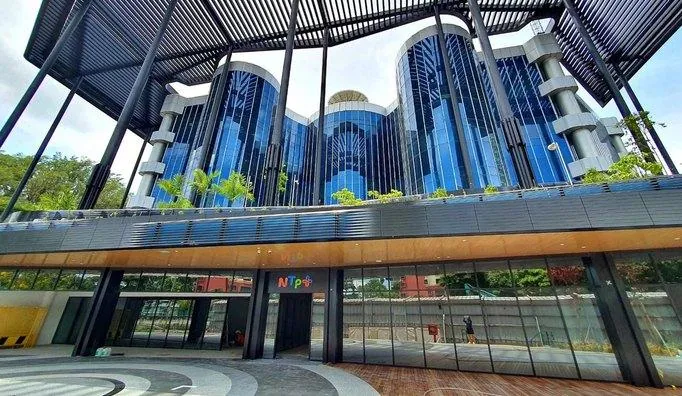
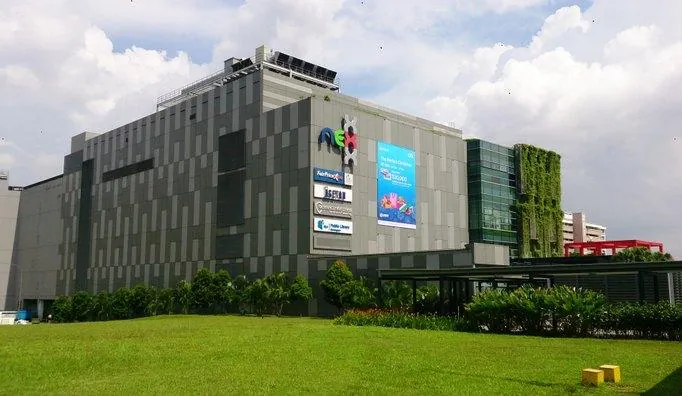
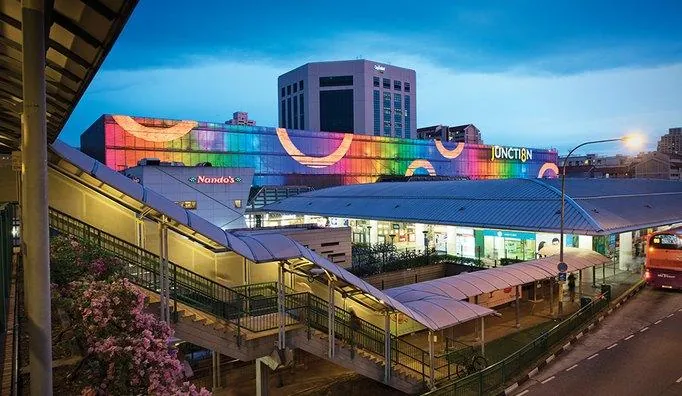
From left: NTP+ at New Tech Park, NEX at Serangoon and Junction 8 at Bishan. Photos for illustration.
Four MOE primary schools sit within about 1km of the site on our dataset. They are St. Gabriel's Primary (~0.31km), Kuo Chuan Presbyterian Primary (~0.57km), CHIJ Our Lady of Good Counsel (~0.92km) and Yangzheng Primary (~0.94km). These are straight-line distances from OneMap coordinates. MOE measures on its own basis, from a final postal address this project does not have yet. Confirm on MOE SchoolFinder before relying on it.
| School | Straight-line distance | 2026 Phase 2C applicants / places | What happened |
|---|---|---|---|
| St. Gabriel's Primary (boys) | ~0.31km | 85 / 83 | Only permanent residents living more than 2km away were balloted |
| Kuo Chuan Presbyterian Primary | ~0.57km | 82 / 48 | Balloted among citizens living within 1km |
| CHIJ Our Lady of Good Counsel (girls) | ~0.92km | 28 / 89 | No ballot; places left over |
| Yangzheng Primary | ~0.94km | 56 / 55 | Balloted, one applicant over |
Living inside 1km gets a family into a ballot. It does not win one. At Kuo Chuan, 82 children with no link to the school competed for 48 places, and the draw ran among citizens inside 1km. At St. Gabriel's, by contrast, every citizen applicant at that stage got in. How this pattern plays out across launches is in primary schools and new launch demand.
Widen the ring to 2km and our dataset counts ten primary schools. The other six are Townsville and First Toa Payoh (both ~1.24km), Zhonghua (~1.50km), Pei Chun Public (~1.59km), Catholic High (~1.74km) and Teck Ghee (~1.89km). Maris Stella High, which some sales material lists, measures about 2.2km on our coordinates. A 1–2km address ranks behind 1km applicants at Phase 2C, and at Pei Chun and Catholic High in 2026 the places ran out before that group was reached.
International schools matter for the tenant pool. The Australian International School is about 300m from the site and Stamford American about 1.8km, so two lie within 2km on our dataset; Lycée Français is about 2.3km. The Early Learning Village on Chuan Lane, the shared preschool campus of Stamford American and Lycée Français, is next to the site, according to the schools' own websites; it is not in our dataset. The nearest hawker centre on our dataset, at Toa Payoh Lorong 8, is about 1.3km away. None is within walking distance, and families who eat out daily should weigh that.
Not on the numbers we can see. Nearby completed condos let for roughly $5.44 psf a month at The Scala and $6.53 at The Tre Ver, the newest completed project nearby, on our rental records. Apply those rents to our indicative range and the gross yield lands around 2.0% to 2.8% (est.). Property tax at non-owner-occupier rates, maintenance and empty months all come off that.
The tenant pool is real. It includes families at the international schools and the Early Learning Village, the New Tech Park office population, and anyone who wants a station one stop from two interchanges. But an investor buying here is buying the street's lack of new supply and the lease's long runway, not the rent. Run your own entry price through the new launch ROI calculator before assuming otherwise.
Owners of flats in Bishan, Toa Payoh and Serangoon (the BTS towns) and in Ang Mo Kio who want to move up without leaving their schools and routines are the clearest fit. That pool has money behind it. Toa Payoh recorded 296 HDB resales of $1 million or more in 2025, the most of any town, out of 1,544 island-wide, as reported by EdgeProp from data.gov.sg figures to 18 December 2025. A flat owner selling at that level has a real deposit for a new launch.
Chuan Park shows how that pool behaves. On its November 2024 launch weekend it sold 696 of 916 units at an average of $2,579 psf, and EdgeProp reported Singaporeans as 93% of buyers. Sales material for One Chuan Grove goes further, putting 71.5% of Chuan Park buyers at HDB addresses and 99.2% as Singaporeans or permanent residents. We could not trace that split to a public source, so treat it as indicative. Either way, Chuan Park's buyers were overwhelmingly local and mostly upgrading.
Landed owners in the Chiltern and Serangoon Gardens pockets who want to release cash without leaving the area also fit, as do families planning around St. Gabriel's or Kuo Chuan. The one-bedroom and smaller two-bedroom types give a smaller household a way in. It fits poorly for a buyer whose entire budget is flat-sale proceeds with no top-up, because a three-bedroom at our range starts near $2.3M. It also fits poorly for anyone expecting to buy below Chuan Park or below completed resale on the same road.
Sing Holdings is listed on the SGX Mainboard. Its Singapore homes include The Laurels in Cairnhill, Robin Residences, Parc Botannia in Sengkang, and the North Gaia and Waterwoods executive condominiums. Sunway Developments is the Singapore arm of Sunway Berhad, which is listed in Malaysia and built Sunway City in Kuala Lumpur. Its recent Singapore projects were joint ventures with Hoi Hup Realty, and three of them are in our dataset.
| Project (district) | Units | Share sold | Average psf sold |
|---|---|---|---|
| The Continuum (D15) | 816 | ~98% | $2,790 |
| Pinery Residences (D16) | 588 | ~94% | $2,551 |
| Terra Hill (D05) | 270 | ~79% | $2,656 |
Two of the three are close to sold out, and the 816-unit Continuum shows Sunway can sell a large project. None of them was a Sing Holdings and Sunway pairing, so One Chuan Grove is this partnership's first launch together. A developer's past sales say little about a future price. What they do show is that both partners have taken projects through from land tender to keys in Singapore.
Standard private condo rules apply. There is no citizenship restriction and no minimum occupation period. Your total monthly loan repayments are capped at 55% of gross monthly income. The test uses a 4% interest rate, not the rate you are offered. You can borrow up to 75% of the price on a first housing loan, 45% on a second and 35% on a third.
Singapore Citizens pay no Additional Buyer's Stamp Duty on a first property, 20% on a second and 30% on a third. Permanent Residents pay 5% on a first and 30% on a second. Foreign buyers pay 60%. Buyer's Stamp Duty applies on the tiered scale on top, about $104,600 on a $2.7M purchase. You cannot pay either stamp duty with loan money.
Seller's Stamp Duty is the tax for selling too soon after buying. Under the schedule effective 4 July 2025 it runs for four years. The clock starts when the option is exercised, not when you get the keys. A purchase at the February 2027 booking would be clear of it in early 2031, a few months after the developers' end-2030 completion estimate.
Progressive payments spread the cash out. You pay 5% on booking, then 15% plus Buyer's Stamp Duty at exercise. After that, payments follow construction milestones, with 25% at completion and the final 15% a year later. With preview targeted for 13 February 2027, the useful step now is an in-principle approval from a bank, so you know which unit sizes you can actually afford.
Work the numbers through our affordability calculator, stamp duty calculator and progressive payment calculator. The TDSR guide explains the stress rate. Flat owners selling first should start with selling an HDB to buy a new launch, because the order of events decides both the stamp duty and the deposit. Test your repayment at a rate above today's. We do not forecast rates.
Six things could make this purchase worse than it looks. Each comes with what softens it.
On our estimates, One Chuan Grove asks buyers to pay at or slightly above Chuan Park, and well above completed resale nearby. In exchange they get a lease that began in 2025, a station a few minutes' walk away on a loop that now runs in full, and two primary schools within 600m. They also get land bought before 2026's higher bids, a facility list built for a 1,056-unit scale, and a street where one seller controls all the new supply. That suits an upgrader or right-sizer from the Bishan, Toa Payoh, Serangoon and Ang Mo Kio area with money beyond their flat proceeds and a seven-to-ten-year horizon. It does not suit a buyer stretching to the last dollar, one who needs a discount against the neighbour, or one buying mainly for rent.
Watch the launch price first. Near $2,820 psf, One Chuan Grove would be priced like The Orie and Vela Bay, and the land cost would not have been passed on in full. Near $3,190, the premium over the adjusted Chuan Park figure has to be justified by the lease and the new building alone. Then watch booking day. Selling half the units in a weekend would show demand deep enough for 1,056 homes; a slow start would suggest the price outran it. We will update this page against both on 13 February 2027.
Wider context sits in our GLS pipeline tracker and the Singapore price trends dashboard. Supply and resale-return figures are in our Chuan Grove investment analysis. Interested buyers can book a showflat viewing, register interest and get the latest e-brochure on the One Chuan Grove appointed developer sales website, where floor plans and the unit mix appear as they are released. Use this page as the yardstick to measure them against.
What to do with this: work out what your current home nets after the CPF refund and outstanding loan, and compare it against the size you need in the unit table above, not against the headline psf. At the preview, check the price list against The Orie's $2,730 and the adjusted Chuan Park figure of $2,730–$2,800.
Sources: URA tender award notices for the Chuan Grove sites (2025); Sing Holdings and Sunway Berhad announcements on the joint venture and amalgamation; the developers' preliminary project information and sales material released September–October 2026 (site area, blocks, unit mix, facilities, consultants, completion estimate); EdgeProp reporting of analyst launch-price expectations (July 2025), Chuan Park's launch weekend (11 November 2024), the 2026 GLS tender results and 2025 million-dollar HDB resales; LTA announcement of Circle Line Stage 6 (opened 12 July 2026) and the Cross Island Line Phase 1 target; MOE Primary 1 registration results for 2025 and 2026 compiled in our schools dataset; our amenity dataset (NEA, NParks, SportSG, MOH and mall directories, geocoded via OneMap); URA caveat records compiled in our transaction and rental datasets; IRAS and MAS for duties and financing rules. Figures marked (est.) are our estimates and subject to change at preview; indicative launch pricing is produced by our pricing model and is not developer pricing. Past performance of comparable projects is not indicative of future results. This page is research, not financial advice. PropertyInsider.sg is an independent research publication. The publisher’s agency is part of the developer’s appointed sales team for this project; that work sits outside the research desk and does not change our figures or verdict. See our editorial policy.
The developers are targeting a preview on 13 February 2027 and booking on 27 February 2027. Both are announced targets, not fixed dates, and can move. The price list, floor plans and stack availability are released at preview. The developers estimate completion at the end of 2030.
No price list exists yet. Our indicative range is $2,820 to $3,190 psf, worked up from an estimated breakeven of about $2,456 psf and the 1.15 to 1.30 margin band we apply to every launch we track. At the announced sizes that implies about $1.34M to $1.51M for a one-bedroom and $2.28M to $3.19M for a three-bedroom. These are our estimates, not developer-confirmed prices.
Preliminary sizes run from a 474 sq ft one-bedroom through 581 to 710 sq ft two-bedroom types and 807 to 1,001 sq ft three-bedrooms, to 1,076 to 1,356 sq ft four-bedrooms and a 1,561 sq ft five-bedroom. On the developers' indicative mix, about 58% of the 1,056 homes are one- or two-bedroom types. The preliminary facility list includes 2 padel courts, 2 golf simulators, a tennis court, a 50m lap pool, a gym of about 1,300 sq ft and private dining rooms. All of it can change at preview.
Yes. Chuan Grove GLS was the working name for the two state land plots at Chuan Grove, awarded to Sing Holdings and Sunway Developments in July and September 2025. The developers named the combined project One Chuan Grove in September 2026. This page keeps its original web address.
On our straight-line dataset, four: St. Gabriel's Primary (~0.31km), Kuo Chuan Presbyterian Primary (~0.57km), CHIJ Our Lady of Good Counsel (~0.92km) and Yangzheng Primary (~0.94km). Ten primary schools sit within 2km. MOE measures on its own basis from a final postal address, so confirm on MOE SchoolFinder. In 2026, Kuo Chuan's Phase 2C had 82 applicants for 48 places and balloted among citizens within 1km.
The developers give about 250m, a 3-minute walk. Our dataset puts Lorong Chuan (CC14) about 440m from the middle of the site, roughly 7 minutes on foot (est.), so the real walk depends on where the gate is. The station is on the Circle Line, one stop from the Serangoon and Bishan interchanges, and the full loop to the southern CBD opened on 12 July 2026.
Chuan Park, across Lorong Chuan, sold 76% of its units on its November 2024 launch weekend at about $2,579 psf and is now about 97% sold. That is about $2,730 to $2,800 psf once restated to post-harmonised floor area. Our One Chuan Grove range of $2,820 to $3,190 psf sits at or above that. Completed condos nearby resold for around $1,990 to $2,230 psf over the past year, so the new-launch premium is about 27% or more.
A 65:35 joint venture of SGX-listed Sing Holdings and Sunway Developments, the Singapore arm of Malaysia's listed Sunway Group. It paid $703.6M and $623.9M for the two plots, a total of $1,327.5M. That works out to a blended $1,355 psf ppr across 979,924 sq ft of permitted floor area, below eight of the nine private and mixed-use sites tendered from April to September 2026.
What a loan of this size costs a month, before you talk to a bank. Change any figure — the instalment, the loan amount and the interest bill all recalculate as you type.
The split shown is the first month’s instalment, not an average: early payments are mostly interest and late ones mostly principal, while the monthly figure itself stays level. This is the loan only — it excludes stamp duty, legal fees, maintenance and property tax, and a home bought under construction draws the loan down in stages rather than all at once. What a bank will actually lend you depends on the LTV limit, TDSR and, for HDB flats and developer-sold ECs, MSR. Work those out on the affordability calculator, stamp duty calculator and progressive payment calculator. Estimates only, not financial advice.
The analysis on this page tells you what the data says. If you want to work through what it means for your own situation — budget, ABSD position, timing an HDB sale, or how this project compares with alternatives — you can request a one-to-one consultation.
Disclosure: advisory consultations are provided by Jamus Lee (CEA Reg. No. R065771E, ERA Realty Network Pte Ltd, Licence No. L3002382K), the publisher of PropertyInsider.sg, via JamusProperty.com. This is a separate service from our editorial research and has no influence over what we publish. See our editorial policy. Submitting this form shares your details with the advisory practice; see our privacy policy.